Source intel thin mini itx motherboard for Industrial, Home, and Office
Find 30 listings for the intel thin mini itx motherboard featuring Intel chipsets, DDR4 memory, and SATA3.0 interfaces. Buyers can compare specifications like 23.8-inch displays, 16GB to 64GB capacity, and OEM packaging options from manufacturers in Guangdong and Shenzhen.
Key considerations
Products List


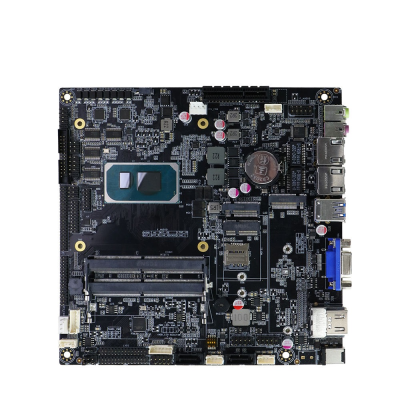
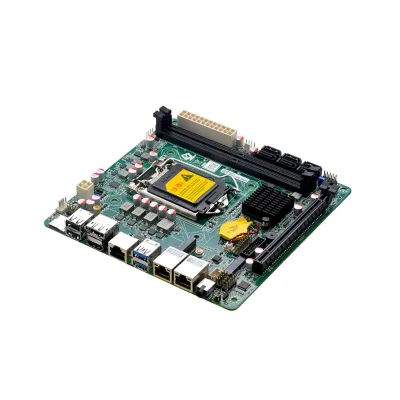


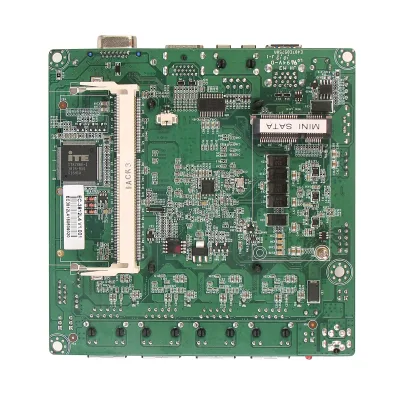
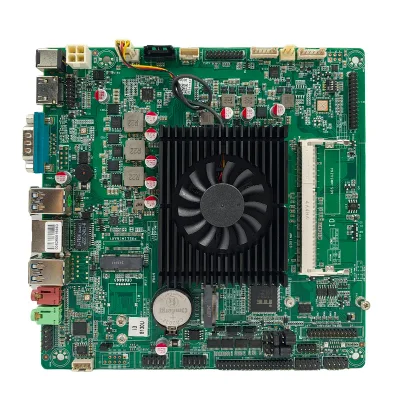
Comprehensive Sourcing Guide
Strategic Sourcing Guide for Intel Thin Mini-ITX Motherboards
Understanding the Core Architecture and Form Factor
The Intel Thin Mini-ITX motherboard represents a specialized segment of industrial computing hardware designed for space-constrained environments where performance and reliability are paramount. Unlike standard Mini-ITX boards, the "Thin" designation typically implies a reduced profile or specific mechanical constraints that allow for integration into compact enclosures, such as digital signage, point-of-sale systems, or embedded control units. The core architecture relies heavily on the Intel chipset ecosystem, with observed specifications indicating support for Intel 6th through 10th generation processors. This generational support range is critical for buyers, as it dictates the available instruction sets, power efficiency profiles, and legacy compatibility with existing software stacks.
The physical structure of these boards often adheres to the Mini-ITX standard, with specific dimensions observed in the market around 600205434mm for certain industrial configurations, though the "Thin" variant may deviate to optimize vertical stacking. The main board structure is frequently integrated, meaning that critical components like the chipset and memory controllers are tightly coupled with the CPU socket or system-on-chip architecture. For buyers evaluating these units, it is essential to verify the specific printed circuit board (PCB) layer count, as high-reliability industrial boards often utilize six-layer structures to ensure signal integrity and thermal management under continuous operation. The SATA interface is a standard feature, with SATA3.0 observed as the prevalent connectivity standard for storage expansion, ensuring compatibility with modern SSDs and HDDs.
Technical Specifications and Performance Parameters
When evaluating the technical capabilities of an Intel Thin Mini-ITX motherboard, buyers must scrutinize the memory architecture and storage capacity, as these are primary determinants of system throughput. The observed market data indicates a variance in memory capacity, with specific models supporting up to 16GB or 64GB of RAM, utilizing DDR4 technology. This DDR4 specification is a significant upgrade over previous generations, offering higher bandwidth and lower power consumption. However, buyers must verify the maximum memory capacity for their specific use case, as some industrial applications may require the full 64GB expansion, while others may function adequately with 8GB or 16GB configurations. The RAM type is consistently DDR4, which ensures compatibility with modern operating systems and enterprise applications.
Storage solutions are another critical technical consideration. While some configurations may include a 500GB HDD capacity, the trend in industrial computing is shifting toward solid-state storage for durability and speed. The SATA3.0 interface supports high-speed data transfer, but the actual performance depends on the specific drive selected by the integrator. Regarding graphics, there is a notable divergence in the market data. Some specifications list "Not Integrated Graphics" alongside discrete options, while others explicitly mention Intel UHD Graphics 630 or AMD GPU chipsets. This inconsistency highlights the importance of verifying the specific model number, such as the UJ6412T-6C2L or URPLPT series, to confirm whether the board relies on integrated graphics or requires a discrete card slot. For thin form factors, integrated graphics are often preferred to maintain the compact profile, but buyers must confirm the video memory type, which is observed as GDDR4 in some contexts, with capacities ranging up to 2GB.
Compliance, Certification, and Safety Standards
In the industrial and B2B sectors, compliance is not merely a regulatory formality but a prerequisite for market access and operational safety. The supply chain for Intel Thin Mini-ITX motherboards typically adheres to a robust set of international certifications. Observed data confirms that reputable suppliers provide products certified under FCC, CE, RoHS, and ISO 9001 standards. The FCC certification ensures that the electromagnetic emissions of the motherboard do not interfere with other electronic devices, a critical requirement for deployment in commercial and public environments. The CE mark indicates conformity with health, safety, and environmental protection standards for products sold within the European Economic Area.
RoHS compliance is equally vital, as it restricts the use of specific hazardous materials in electronic equipment, ensuring that the manufacturing process and the final product are environmentally friendly. Additionally, the ISO 9001 certification validates that the manufacturer maintains a quality management system that consistently meets customer and regulatory requirements. For specific material safety, the UL94V-0 rating is a key standard to verify; this rating indicates that the plastic materials used in the PCB and casing are self-extinguishing and highly resistant to fire, a crucial safety feature for industrial installations where overheating or electrical faults could pose a risk. Buyers should explicitly request certification documentation to ensure that the specific batch of motherboards being procured carries these valid certifications, as standards can vary by production run.
Cost Drivers and Procurement Economics
The pricing of Intel Thin Mini-ITX motherboards is influenced by a complex interplay of factors, including the generation of the Intel processor supported, the memory capacity, and the level of customization required. The observed price range in the market spans from 45 to 365 USD, a wide variance that reflects the difference between basic industrial boards and high-specification models with extended memory and advanced features. Several key drivers contribute to these costs. First, the CPU generation is a primary cost factor; boards supporting 10th generation Intel processors generally command a higher price than those limited to 6th or 7th generations due to the increased processing power and newer architecture.
Second, the memory configuration significantly impacts the final price. A board configured with 64GB of DDR4 RAM will be substantially more expensive than one with 8GB. Third, the level of customization plays a major role. While standard specifications are available, many industrial clients require customized PCB layouts, specific connector placements, or unique BIOS configurations. These customizations, often labeled as "Standard Specifications or Customized," incur additional engineering and tooling costs. The Minimum Order Quantity (MOQ) is another economic consideration, with observed ranges between 1 and 10 units. This flexibility allows small-scale integrators to prototype without significant capital outlay, while larger enterprises can negotiate better pricing through volume orders. Buyers should also consider the warranty terms, with a standard 1-Year warranty being common, though extended warranty options may increase the total cost of ownership.
Typical Applications and Deployment Scenarios
The versatility of the Intel Thin Mini-ITX motherboard makes it suitable for a diverse array of applications, particularly in sectors where space is at a premium and reliability is non-negotiable. One of the most common use cases is in home and light commercial environments, where the board powers compact all-in-one PCs, digital signage, and interactive kiosks. The 23.8-inch display ratio of 16:9 observed in associated systems suggests a strong alignment with modern visual standards for media playback and user interfaces. In industrial settings, these boards are frequently deployed in automation control panels, where the integrated graphics and robust SATA interfaces allow for seamless data logging and machine visualization.
The "Home" designation in product attributes also points to their suitability for consumer electronics, such as compact media centers or home servers. The specific model numbers, such as URPLPT-6C2L-12th i7, indicate that these boards are often paired with high-performance processors for demanding tasks like video rendering or complex data processing. The integration of SMT (Surface Mount Technology), BGA (Ball Grid Array), and DIP (Dual In-line Package) manufacturing processes ensures that these boards can withstand the rigors of continuous operation in harsh environments. Furthermore, the ability to support various display resolutions, including 1920x1280, makes them ideal for applications requiring high-definition output without the need for external graphics cards.
Supplier Evaluation and Quality Assurance Protocols
Selecting the right supplier for Intel Thin Mini-ITX motherboards requires a rigorous evaluation of their manufacturing capabilities and quality assurance protocols. Buyers should prioritize suppliers who have been established manufacturers for a significant period, such as those with over 15 years of experience in the industry, as this often correlates with a mature supply chain and refined production processes. The inspection regime is a critical differentiator; high-quality suppliers implement a comprehensive inspection process that includes 100% Incoming Quality Control (IQC), In-Process Quality Control (IPQC), Final Quality Control (FQC), Quality Assurance (QA), and In-Circuit Testing (ICT). This multi-stage approach ensures that defects are caught early and that the final product meets all functional specifications.
When evaluating potential suppliers, buyers should verify their production type, which typically includes SMT, DIP, assembling, and testing. The presence of these capabilities in-house suggests a high degree of control over the manufacturing process. Additionally, the supplier's location, often noted as Guangdong or Shenzhen, China, provides access to a dense ecosystem of electronic component suppliers, which can lead to faster lead times and better component availability. Buyers should also inquire about the supplier's ability to provide OEM and ODM services, as this indicates flexibility in meeting specific design requirements. The "Good Services" offered, such as SMT and BGA assembly, are indicators of technical proficiency. It is essential to confirm that the supplier can provide detailed documentation regarding their quality control measures and that they adhere to the stated standards like ISO 9001.
Long-Term Procurement and Lifecycle Management
Procuring Intel Thin Mini-ITX motherboards is not a one-time transaction but a strategic decision that impacts long-term operational efficiency and total cost of ownership. Buyers must consider the lifecycle of the components, particularly the CPU generation and memory technology. While 6th to 10th generation Intel processors offer a balance of performance and cost, the availability of spare parts and replacement boards may diminish as newer generations become the industry standard. Therefore, it is advisable to align procurement with the expected lifespan of the deployed systems. For critical applications, selecting a board with a longer support window or a modular design that allows for easier upgrades can mitigate the risk of obsolescence.
Warranty and after-sales support are also critical components of long-term procurement. A standard 1-Year warranty provides a baseline of protection, but buyers should negotiate terms that cover extended periods for high-volume deployments. The response time and contrast ratio of associated displays, while not directly related to the motherboard, are part of the overall system performance that must be maintained over time. Furthermore, the "Standard Specifications or Customized" nature of the product means that buyers should ensure that any customizations are well-documented to facilitate future repairs or replacements. Finally, buyers should monitor the supply chain for potential disruptions, particularly regarding the availability of DDR4 memory and SATA components, to ensure that their inventory levels remain sufficient to meet demand without interruption. By focusing on these long-term factors, organizations can build a resilient procurement strategy that supports their operational goals for years to come.
FAQs
What certifications do these motherboards hold?
These motherboards typically hold FCC, CE, RoHS, and ISO 9001 certifications. Some specific models also carry UL94V-0 ratings for fire safety, ensuring compliance with international safety and environmental standards for industrial use.
Which memory types are supported by this board?
The board supports DDR4 RAM with capacities ranging from 8GB to 64GB depending on the specific model. Some configurations list a maximum capacity of 16GB, while others allow up to 64GB expansion for high-performance industrial applications.
Can I find models with integrated graphics?
Yes, many models feature integrated graphics such as Intel UHD Graphics 630 or AMD chipsets. However, some specifications list no integrated graphics, so buyers must verify the specific model number to confirm the video card chipset before purchasing.
What is the standard warranty period offered?
The standard warranty period offered is typically one year. This coverage applies to the manufacturing defects and ensures reliability for home or industrial deployments, though extended warranty options may be available through specific suppliers.
How does the packaging vary for these units?
Packaging options include OEM packages, export carton boxes, or standard specifications. The specific packing method depends on the supplier and order requirements, ensuring the product is protected during transit to locations like Guangdong or Shenzhen.
What is the minimum order quantity for these boards?
The minimum order quantity ranges from 1 to 10 units depending on the supplier. This flexibility allows small integrators to prototype while enabling larger enterprises to negotiate better pricing through volume orders for industrial deployments.
Which processor generations are compatible with this board?
The board supports Intel 6th through 10th generation processors, with some models explicitly supporting 12th generation i3 or i7 chips. This generational range dictates the available instruction sets and power efficiency profiles for the system.